A man should wear what the invitation's dress code asks for, and when there is no dress code, a dark suit in navy or charcoal with a white or light blue shirt, a tie and polished leather shoes is correct at almost every wedding in America. That one outfit covers semi-formal, cocktail and most "formal" invitations. Go to a tuxedo only for black tie, and go down to a sport coat and no tie only when the couple asks for casual.
The rest of this guide decodes each line you might find on the card, then deals with season, ties and shoes. One principle runs through all of it: a guest who is a notch too formal looks respectful, and a guest a notch too casual looks like he did not read the invitation.
Where to look before you shop
The invitation is the start, not the end. Most couples now run a wedding website, and The Knot advises checking it for the dress code and any theme. Look at three things: the time (an evening start is dressier than a noon one), the venue (a cathedral and a barn ask for different shoes), and the season. If you still cannot tell, ask a groomsman what the wedding party is wearing, then stay a step below them.
Wedding dress codes for men, decoded
| Invitation says | Wear | Tie | Shoes |
|---|---|---|---|
| White tie | Tailcoat | White bow tie | Black patent |
| Black tie | Tuxedo | Black bow tie | Black patent or polished black |
| Black tie optional / formal | Tuxedo or dark suit | Black bow tie or dark tie | Black oxfords |
| Cocktail / semi-formal | Suit | Yes | Oxfords or derbies |
| Dressy casual | Sport coat or suit | Optional | Loafers, derbies |
| Casual / beach | Shirt and chinos, maybe linen jacket | No | Loafers, clean leather |
White tie
Rare at weddings, but it exists at a handful of very formal evening ceremonies. It is a precise uniform, and the Emily Post Institute lists it in full: a black tailcoat and matching trousers with "a single stripe of satin or braid in the US; two stripes in Europe or the UK," a white wing-collared pique shirt, white vest, white bow tie, white or gray gloves, and black patent shoes. Rent it from a formalwear specialist unless you expect to wear it again.
What does black tie mean for a man at a wedding?
Black tie means a tuxedo. Emily Post spells out the full set: black tuxedo jacket and matching trousers, a formal white shirt with studs and cufflinks, a black bow tie, a black cummerbund or vest, and black patent shoes. A self-tied bow tie looks better than a pre-tied one because it is slightly uneven, which is the point.
The Knot's black-tie guide also names a navy tuxedo as an option, and midnight navy reads nearly black under evening light. For a summer wedding, or one in a hot climate or on a cruise, Emily Post allows a white dinner jacket, worn with the black trousers and black bow tie. Gentleman's Gazette traces the white jacket to warm-weather resorts in the early 1930s and warns it turns into a gimmick when worn in the wrong place. Keep it to outdoor or resort weddings in real heat.
The same guide suggests burgundy or emerald for men who want to switch things up. They work best at winter evening weddings and on a guest who is comfortable being noticed. If you are not sure, wear black.
Black tie optional and "formal"
The couple will be in formalwear and some guests will match them, but nobody is required to. Emily Post: "a tuxedo, or a dark suit with a white dress shirt and conservative tie," leather dress shoes and dark socks. "Formal" on its own is read the same way by most guests.
If you own a tuxedo, this is the night for it. If you do not, a charcoal or navy suit in a smooth worsted, a white shirt, a dark solid or quietly patterned silk tie and black cap-toe oxfords will put you squarely in the room. Skip brown shoes, novelty socks and anything in linen.
Cocktail and semi-formal
These two are the most common codes on American wedding invitations, and for a man they mean nearly the same thing: a suit and tie. Emily Post's semi-formal is a dark suit, dress shirt and tie, "leather dress shoes, and dark dress socks," and it advises erring toward formality for events after 6 p.m.
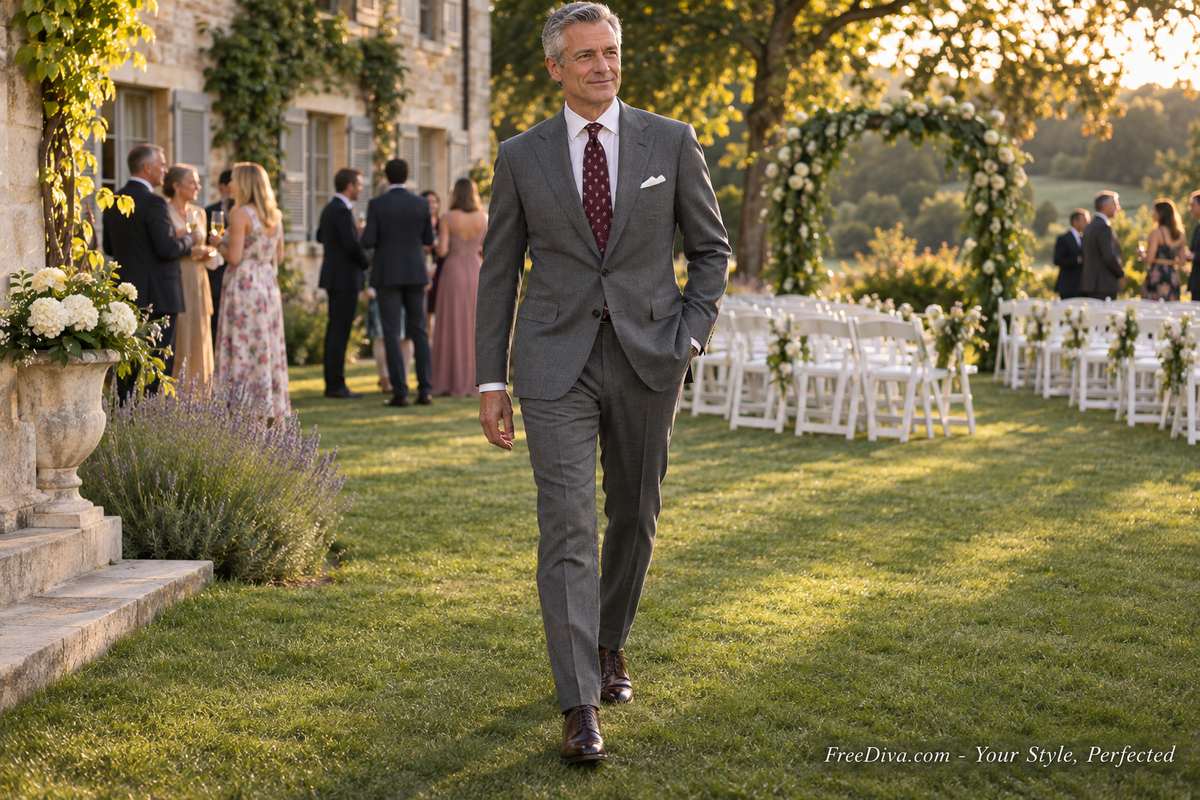
Here a man has real choices. The suit can be navy, charcoal or mid-gray, and in the day, lighter grays and soft blues. A patterned tie, a pocket square in a color from the tie (never a matched set), brown shoes with a navy or gray suit in daylight. At an evening cocktail wedding, darken everything one step: charcoal suit, black or very dark brown shoes, a richer tie.
If you are bringing a date in a cocktail dress, the two codes are explained from her side in our guides to cocktail attire and semi-formal attire. Reading them together saves an argument in the car.
Dressy casual and casual
"Dressy casual" means a jacket, not necessarily a suit. A navy blazer or a textured sport coat with gray wool or stone cotton trousers, a crisp shirt, no tie or a knit one, and loafers or suede derbies. The Knot's dressy casual guide suggests a button-down, chinos, a blazer and loafers as the typical version.
"Casual" at a wedding is still not the casual of a Saturday errand. Clean chinos, a pressed long-sleeved button-down (short sleeves only in real heat at an outdoor wedding), loafers or clean leather sneakers if the couple is relaxed. Skip shorts and jeans unless the couple has said they are fine; dark jeans can pass at a backyard wedding where the hosts are wearing them.
Beach weddings
Linen and cotton exist for this. A linen suit in sand, light gray or soft blue, or linen trousers with an open-collar shirt; ties optional unless the code says formal. Leather loafers or suede driving shoes you can take off at the sand's edge. Linen wrinkles, and the wrinkles are part of its charm, but press it before the ceremony.
What color suit should a man wear to a wedding?
Navy is the safest suit color for a wedding guest in any season, at any hour. Charcoal comes next and is a touch more formal. After that, the season chooses.
- Spring: mid-gray, light gray, soft blue; worsted wool or a wool-linen blend. Ties in lighter colors, florals if you like them.
- Summer: light gray, tan, pale blue; tropical wool, cotton, linen. The Knot's summer guide for men recommends lighter-weight cotton or linen, especially outdoors.
- Fall: navy, charcoal, brown; flannel and fine tweed. Ties in burgundy, forest green or rust.
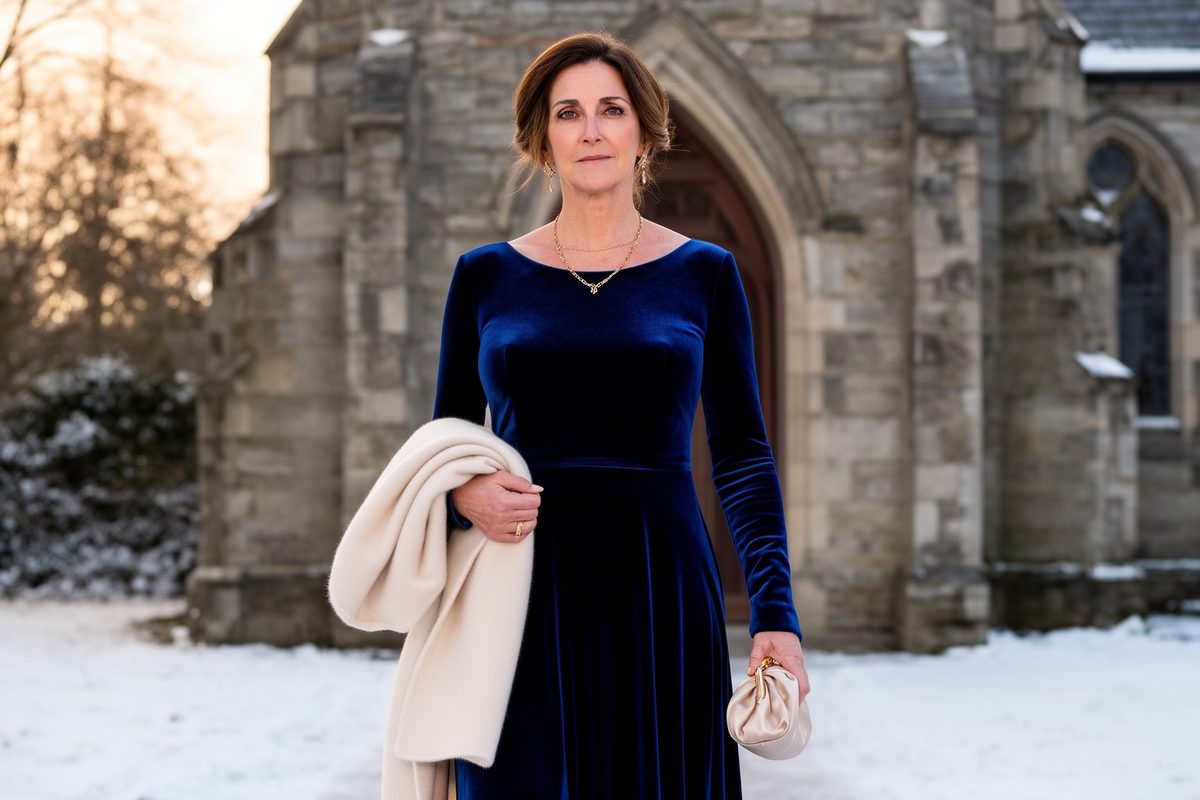
- Winter: charcoal, navy, deep green or brown; heavier flannel. Evening winter weddings are the natural home for velvet.
Three colors to avoid as a guest: an all-white suit (it competes with the couple, and a white suit at an evening wedding is a costume), black outside of black tie (a black business suit reads funeral at a daytime wedding), and anything the groomsmen are wearing, if you know it.
Which navy, which gray and which tie suit your own coloring is a question of skin tone and contrast, covered in our post on colors that flatter every skin tone.
Ties, shirts and the small things
The shirt. White or light blue, plain or with a fine stripe at day weddings. A spread or semi-spread collar suits most faces and most tie knots. Make sure the collar closes without strain: at a long reception you will feel every quarter inch.
The tie. Silk, in a solid, small repeating pattern or a stripe. Its tip should reach the top of the belt buckle. Wool and knit ties belong to fall and to dressy casual codes. Skip novelty prints unless the couple have asked for them.
The pocket square. White linen folded flat goes with everything. A colored silk square should pick up a color from the tie without matching it.
Shoes. Black oxfords for black tie optional and evening suits; dark brown oxfords or derbies for daytime suits; loafers for dressy casual and beach. Polish them. At an outdoor wedding on a lawn, leather soles slide on damp grass, so rubber-soled shoes or a quiet heel tap help.
The fit. No dress code forgives a jacket that pulls at the button or sleeves that cover the shirt cuff. If your suit is a few years old, try it on two weeks before, not the morning of. Bodies change, and a tailor needs time. Our guide to men's body types and how to dress them covers what to look for, and FreeDiva's /style page has a Men's looks button that builds three looks around your shape and the occasion from one photo.
Religious and cultural weddings
Religious and cultural weddings carry their own expectations, and the couple's own guidance beats any general rule. At many Jewish weddings, Ritualwell notes, all men wear kippot during the ceremony, and they are usually handed out at the start, so you do not need to bring one. Houses of worship of every faith tend to be more conservative than the reception that follows: keep the jacket on for the ceremony even if it comes off for dancing. When a wedding follows a tradition you do not know, ask the couple or check their website, and dress to their customs rather than your idea of them. The women in your party face the same decisions; our wedding guest guide for women covers their side.
Quick answers
Can a man wear a suit without a tie to a wedding?
Yes at a dressy casual, casual or beach wedding, and at many semi-formal summer daytime weddings if the groomsmen are not in ties. At black tie optional, formal or evening cocktail weddings, wear the tie.
Can I wear brown shoes to a wedding?
Yes with navy, gray, tan or brown suits at daytime and semi-formal weddings. Keep black shoes for black tie, black tie optional and evening formal weddings.
Is a black suit OK for a wedding?
At an evening wedding, a well-cut black suit with a white shirt and a dark tie is accepted, though a charcoal or navy suit looks more considered. At a daytime wedding, choose another color.
If the suit is the easy part and the shirt, tie and shoes are where you stall, upload a photo to FreeDiva and pick Men's looks: tell it the occasion and it builds three complete outfits for your shape and coloring.
Want Personalized Outfit Recommendations?
Upload a photo and let our AI stylist create complete outfits tailored to your body type, skin tone, and personal style.
Try AI Stylist