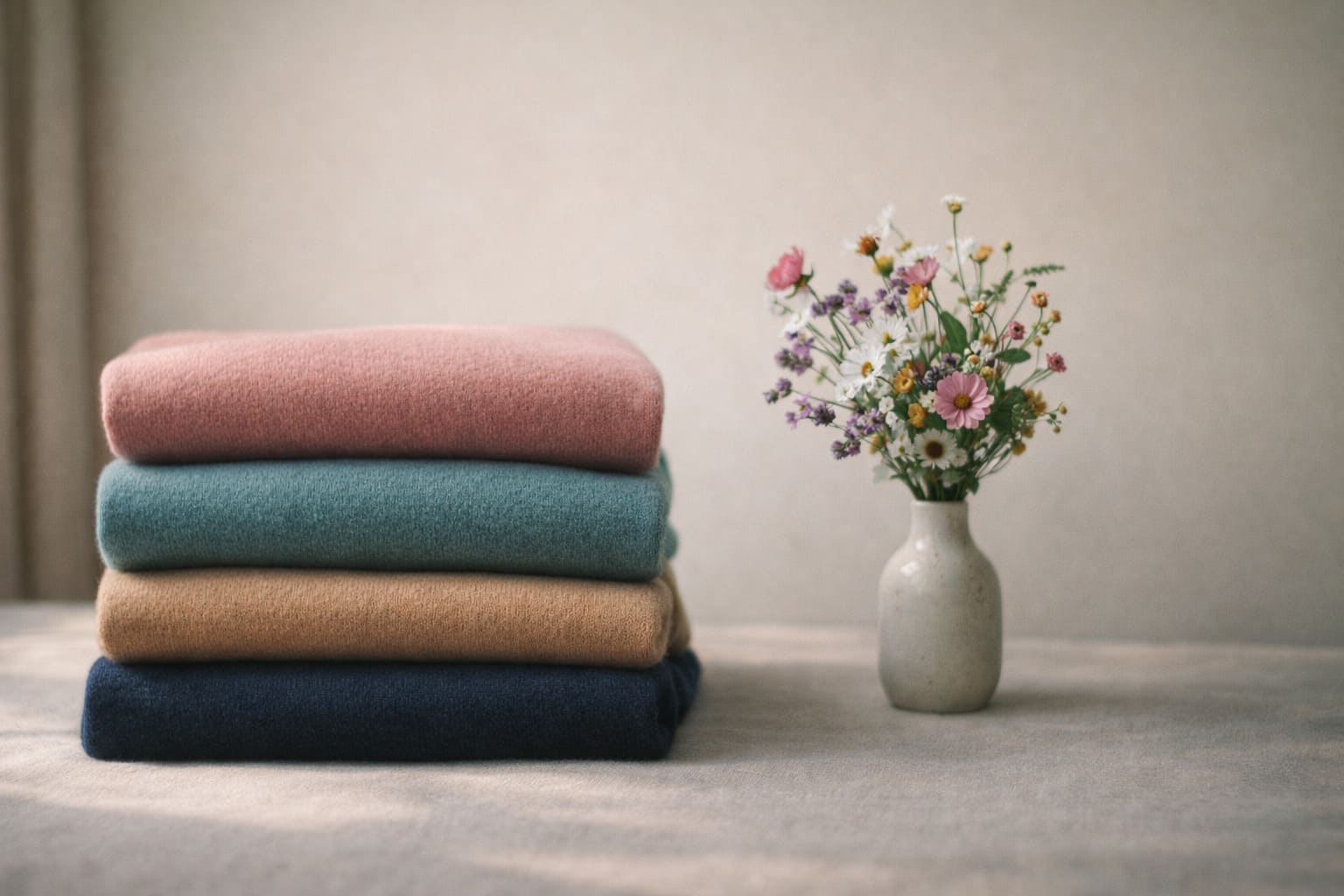
Somewhere between college and adulthood, most women narrowed their color palette to black, gray, navy, and maybe a reluctant white. It felt sophisticated. It felt safe. It felt like every French style icon they'd ever read about.
But here's what those French style icons don't tell you: they live in Paris, where the overcast light makes black look chic. In American daylight — especially if you live anywhere south of Seattle — black near your face can drain your color, deepen shadows, and make you look tired.
Color isn't just decoration. It's a tool. The right color next to your face makes your skin glow, your eyes brighten, and your features pop. The wrong color does the opposite. And once you understand which colors are yours, getting dressed becomes dramatically easier and more fun.
The Color Theory Basics You Actually Need
You don't need a Color Me Beautiful consultation from 1985 (though that book got a lot of things right). You need to understand three concepts:
1. Warm vs. Cool
Colors, like skin tones, have temperature. Warm colors have yellow or golden undertones. Cool colors have blue or pink undertones. Matching your clothing color temperature to your skin undertone creates harmony.
- Warm skin + warm colors (golden yellows, olive greens, warm reds, coral) = your skin glows
- Cool skin + cool colors (true blue, emerald, berry, cool pink) = your skin looks clear and bright
- Neutral skin + either direction = you can play both sides
2. Contrast Level
This is about the difference between your hair, skin, and eye color. High-contrast coloring (think dark hair and fair skin, like Snow White) can handle high-contrast outfits (black and white, navy and red). Low-contrast coloring (think blonde hair and fair skin, or deep skin and dark hair) looks better in tonal, less extreme combinations.
3. Saturation
Bright, saturated colors overwhelm muted coloring. Soft, dusty colors can wash out vivid coloring. Match the intensity of your clothing to the intensity of your natural coloring.
Finding Your Best Colors: A Practical Method
Forget the seasonal color analysis systems with their complicated sub-categories. Here's a method that works in your own bathroom mirror:
The Draping Test
- Stand in front of a mirror in natural light (not bathroom vanity lighting — actual daylight).
- Remove all makeup. Pull your hair back.
- Hold different colored fabrics, scarves, or even bath towels near your face.
- For each color, look at your skin, not the color itself.
Signs a color is right for you:
- Your skin looks even and healthy
- Your eyes appear brighter
- Any redness or discoloration seems to diminish
- You look awake and vibrant
Signs a color is wrong for you:
- Your skin looks sallow, ashy, or yellowish
- Dark circles under your eyes seem more pronounced
- Blemishes and redness are more visible
- You look tired, even if you're not
Test multiple shades within each color family. You might find that bright cobalt blue is terrible but dusty blue is gorgeous. Or that emerald green washes you out but olive green is perfect.
The Colors That Work for (Almost) Everyone
Some colors are remarkably universal. If you're rebuilding your color confidence, start here:
Teal
Teal bridges warm and cool — it has both blue (cool) and green (warm) components. It flatters an incredibly wide range of skin tones and makes both brown and blue eyes look more vivid. It's also a gorgeous neutral alternative to navy.
Soft White and Ivory
Pure white can be harsh against very fair or very deep skin. Soft white and ivory are more forgiving — they have enough warmth to complement most complexions without the starkness of optical white.
True Red
Not orange-red, not blue-red, but a true, balanced red works on a surprising range of skin tones. It's high-energy and universally attention-grabbing. If you're not ready for a red top, start with a red accessory — a bag, a scarf, a shoe.
Dusty Rose
This muted pink flatters warm, cool, and neutral undertones. It's feminine without being juvenile, and it pairs beautifully with navy, gray, denim, and cream. Charlotte Tilbury built an empire on this color, and she was right to.
Navy
Navy is the sophisticated alternative to black. It's softer, more flattering near the face, and works with virtually every other color. If you live in all-black and want to transition gently, navy is your bridge.
Olive and Sage Green
These muted greens have warm undertones that complement most skin tones. They're earthy without being dull, and they photograph beautifully (if that matters to you — and in the age of FaceTime, it should).
Colors by Undertone: Your Personal Palette
If You Have Warm Undertones
Your power colors are anything with golden warmth:
Your best neutrals: Camel, warm beige, chocolate brown, cream, olive Your statement colors: Coral, warm red (tomato), golden yellow, terracotta, burnt orange, warm turquoise Your accent colors: Peach, warm pink, olive green, copper, gold
Avoid or wear away from your face: Black (substitute with chocolate brown or charcoal), cool gray, icy blue, hot pink, fuchsia
If You Have Cool Undertones
Your power colors have blue or pink undertones:
Your best neutrals: Charcoal gray, navy, cool taupe, soft white, cool brown Your statement colors: True blue, emerald green, raspberry, cool red (cherry), plum, teal Your accent colors: Lavender, cool pink, icy blue, silver, burgundy
Avoid or wear away from your face: Orange (substitute with rust or dusty peach), mustard yellow, warm beige, bright coral
If You Have Neutral Undertones
Your advantage is range. You can borrow from both palettes:
Your sweet spot colors: Dusty rose, soft teal, true red, medium blue, sage green, warm gray Your statement colors: Cobalt, emerald, burgundy, coral, eggplant The colors that still might not work: Very warm yellows and very cool pastels can sometimes miss. Test before committing.
Moving Beyond Black: A Gradual Approach
If you're currently living in all-black and the idea of color feels overwhelming, don't go from zero to a full rainbow. Here's a transitional strategy:
Week 1-2: Color Near Your Face
Keep your black pants and skirts. Replace a black top with one in navy, soft white, or dusty rose. The bottom half stays safe; the top half starts working with your complexion.
Week 3-4: A Colored Accessory
Add a scarf, bag, or shoe in one of your flattering colors. This introduces color without requiring you to rethink your entire outfit. A teal bag with an all-black outfit. A red scarf with navy and white. Small but visible.
Month 2: A Statement Piece
Buy one top, blazer, or dress in a color that flatters you. Wear it with the neutrals you already own. You'll discover that color doesn't require a whole new wardrobe — it just needs a compatible background.
Month 3: The Tonal Outfit
Try wearing multiple shades of one color family. Navy pants with a blue chambray shirt and a cobalt bag. Cream pants with a camel sweater and cognac boots. Tonal dressing is the easiest way to look intentional in color without worrying about clashing.
Color and Occasion
Color communicates. Use it strategically:
Job interview: Navy conveys competence. Deep green conveys calm confidence. Avoid all-black — it can read as unapproachable.
First date: Warm tones (dusty rose, soft coral, teal) are inviting. Red is bold. Black is safe but doesn't give the other person much to remember.
Important meeting: Blue builds trust — it's the most universally positive color in business contexts. Deep jewel tones convey authority without aggression.
Social events: This is where you can be most expressive. Wear the color that makes you feel most alive. If that's fuchsia, wear fuchsia. If it's rust, wear rust.
Using Technology to Find Your Colors
FreeDiva's AI stylist analyzes your skin tone and coloring as part of its photo-based recommendations. This gives you a data-driven starting point for your color exploration — it can identify your undertone and suggest which color families will be most flattering, taking the guesswork out of standing in front of your mirror with bath towels draped over your shoulders.
The Emotional Case for Color
Color affects mood — yours and everyone around you. Wearing colors you love that also happen to flatter your complexion creates a positive feedback loop: you look in the mirror and feel good, which makes you carry yourself with more confidence, which makes you look even better.
All-black can be armor, and sometimes armor is exactly what you need. But it can also be hiding. And after 35, most women have earned the right to stop hiding and start showing up — in full color.
The closet full of black isn't protecting you. It's flattening you. Your best colors are waiting to do the opposite.
Want Personalized Outfit Recommendations?
Upload a photo and let our AI stylist create complete outfits tailored to your body type, skin tone, and personal style.
Try AI Stylist