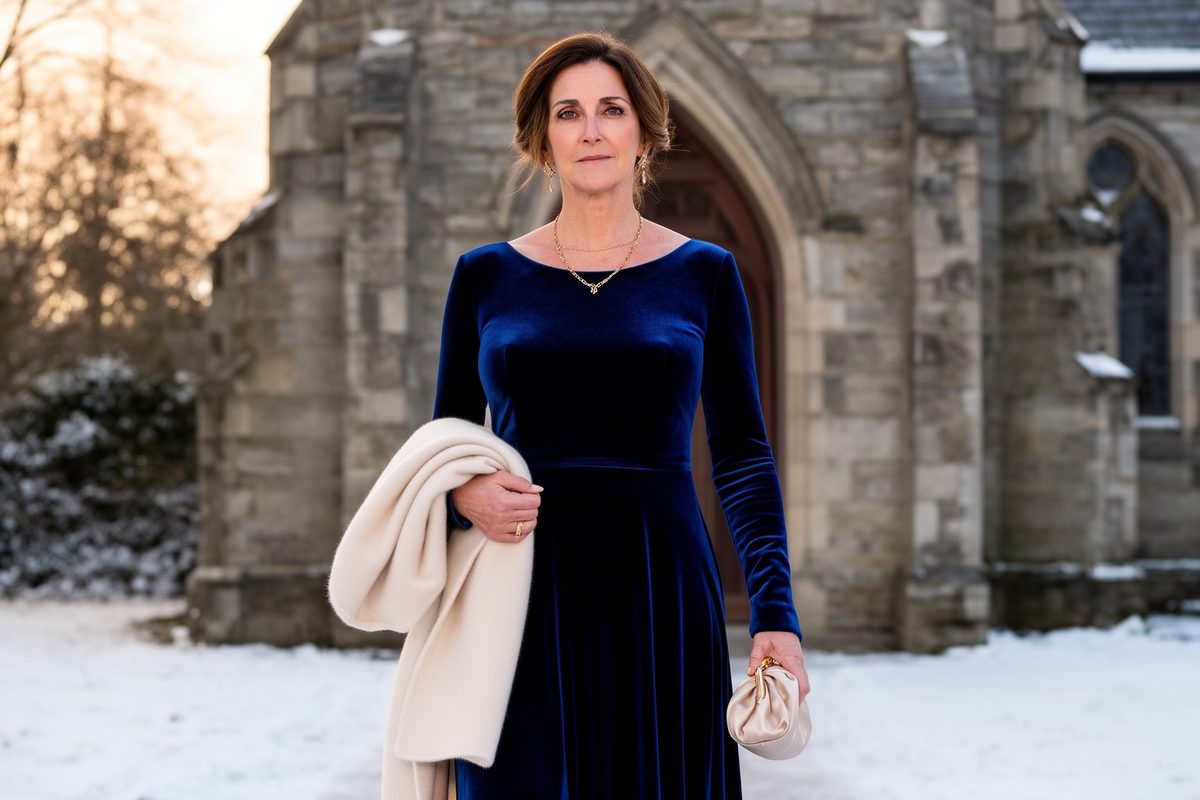
A winter wedding asks more of a guest outfit than a summer one. You will be cold in a stone church, overheated at a reception, photographed outdoors at dusk in whatever you brought as a coat, and on your feet for six hours on a floor that is either gravel, grass or polished wood. Meanwhile the invitation says "black tie optional" and you have read it four times.
Here is how to dress for it: the dress codes translated, the fabrics that work in January, and honest answers on tights, coats and shoes.
First, Translate the Dress Code
Black tie. A floor-length gown, or a very dressy midi in a luxurious fabric. Velvet is entirely correct here and warmer than chiffon. Heels, real jewelry, a small clutch.
Black tie optional. A floor-length dress or an elegant midi. This is the most common winter wedding code and the most forgiving: a velvet midi dress with heels is right, and so is a long column dress.
Cocktail. Knee-length to midi. A velvet or satin dress, or dressy separates: a jewel-tone silk blouse with a long satin skirt. This is where most winter weddings land.
Festive or semi-formal. Midi dress, or a suit, or separates. You have room to wear a jumpsuit or a trouser suit without being the only person who did.
No dress code given. Assume cocktail and lean slightly dressier. Nobody has ever been embarrassed by being the better-dressed guest at a wedding.
The one rule that holds across all of them: not white, not cream, not ivory, not champagne, and not full black if the couple is traditional about it. Black is widely accepted at a winter evening wedding now, but if you are unsure, a deep jewel tone is the safer version of the same elegance. There is more on reading an invitation in the wedding guest guide.
The Fabrics That Actually Work in Winter
Velvet. The correct winter wedding fabric: formal, warm, and it photographs with depth rather than flatness. Marie Claire's winter 2026 report makes the case that the season's best clothes are simultaneously weatherproof and party-proof, which is velvet exactly. A velvet midi in sapphire, emerald, plum or oxblood is the single best thing to own for this. It is also the fabric of the whole party season, so it earns its place.
Heavy crepe. Structured, matte, holds a shape, and the most forgiving fabric made. A floor-length crepe column dress is the most reliable black tie answer there is.
Satin. Beautiful in photographs and unforgiving in person, because it shows every line underneath. Choose a bias cut with a lining, or wear seamless underwear and accept the rest.
Wool crepe and fine knit. Underrated for daytime winter weddings. A long-sleeve fine-knit dress in a rich color with good jewelry is appropriate and warm.
What does not work: chiffon, organza and anything strappy and floaty. They were designed for July. You will spend the whole day cold and the photographs will look out of season.
Five Outfits by Occasion
1. Evening Black Tie, Church Ceremony
A floor-length velvet dress with long sleeves in sapphire or deep plum, delicate gold jewelry, a satin clutch, and a cream or camel wool wrap coat. Heels you can walk on gravel in, or heels plus a flat in your bag.
The long sleeve is the whole trick. A sleeved floor-length dress means you are warm in the church, correct at the dinner, and you do not need a wrap draped over your arms in every photograph.
2. Afternoon Cocktail Wedding
A velvet or crepe midi dress in emerald or burgundy, opaque tights, suede heeled ankle boots or closed pumps, and a long wool coat. Gold earrings, hair down.
Midi plus closed shoes plus tights is the correct winter daytime formula, and it survives a cold ceremony and a long lunch equally.
3. Dressy Separates, For Anyone Who Does Not Wear Dresses
A long satin or velvet skirt in a jewel tone with a fine cashmere knit or a silk blouse tucked in, a slim belt, heeled boots, and statement earrings.
This is as formal as a dress and considerably more comfortable. A floor-length satin skirt with a black cashmere turtleneck is one of the most elegant things you can wear to a winter wedding and almost nobody does it.
4. The Trouser Suit
A velvet or satin trouser suit in midnight, emerald or oxblood with a silk camisole underneath, pointed heels or loafers, and good jewelry.
Appropriate for festive, semi-formal and cocktail, and arguably the warmest formal option available. It has pockets, which at a six-hour event is not a small thing.
5. The Destination Winter Wedding
If the wedding is somewhere genuinely cold, build the outfit around the coat and the shoes and let the dress be simple: a long-sleeved crepe or velvet midi, thermal tights under opaque tights, waterproof-soled boots for the journey with heels carried in a bag, and a proper wool coat rather than a wrap. For packing it all into a carry-on, the packing guide has the method.
The Four Questions Everyone Actually Has
Can I wear tights? Yes. Opaque tights in black or a deep shade matching your dress are correct, warm and entirely appropriate with a midi. Sheer nude tights are also fine and have stopped being a crime. The only wrong answer is bare legs at a January wedding, which ends with you shivering in photographs.
What do I do about the coat? Treat it as part of the outfit, because every arrival and departure photograph includes it. A long wool coat in camel, cream, black or a jewel tone over a formal dress is right. A puffer over a velvet gown is not, however cold it is. If you need to buy one, this season's coat shapes covers what to look for, and a cream or camel wrap coat is the most useful thing you can own for events.
What shoes? Closed toe, always, in winter. A block heel or a low pointed heel for grass, gravel and old church floors. Suede looks richer than patent in winter but dies in snow, so check the forecast. Bring a folded flat for the end of the night.
Can I wear black? At an evening winter wedding, yes, almost everywhere in the US now. At a daytime wedding, or a very traditional or religious one, choose a deep jewel tone instead. If the invitation specifies black tie, black is explicitly expected.
Getting the Color Right
Winter weddings are the one occasion where jewel tones beat everything else: sapphire, emerald, ruby, amethyst, oxblood. They photograph richly against winter light, they suit the formality, and they avoid every color problem on the list.
Which one depends on you rather than on the season. Cool complexions carry sapphire, emerald and amethyst easily. Warm complexions look best in oxblood, rust, deep gold and forest. If you are not sure which you are, the skin tone color guide sorts it out in about five minutes.
For the dress shape, the one piece of advice that outperforms all others is to mark your waist somewhere, whether with a belt, a wrap, a seam or a tuck. It is the single most reliable move in formal dressing, which is why one silhouette gets its own article.
If you would rather not guess, upload a photo to the FreeDiva stylist and it will read your proportions and coloring and build complete wedding guest looks, including the shoes and the jewelry. And if the wedding is the week after a string of December parties, the holiday party guide will stop you from buying four outfits where two would do.
Want Personalized Outfit Recommendations?
Upload a photo and let our AI stylist create complete outfits tailored to your body type, skin tone, and personal style.
Try AI Stylist

