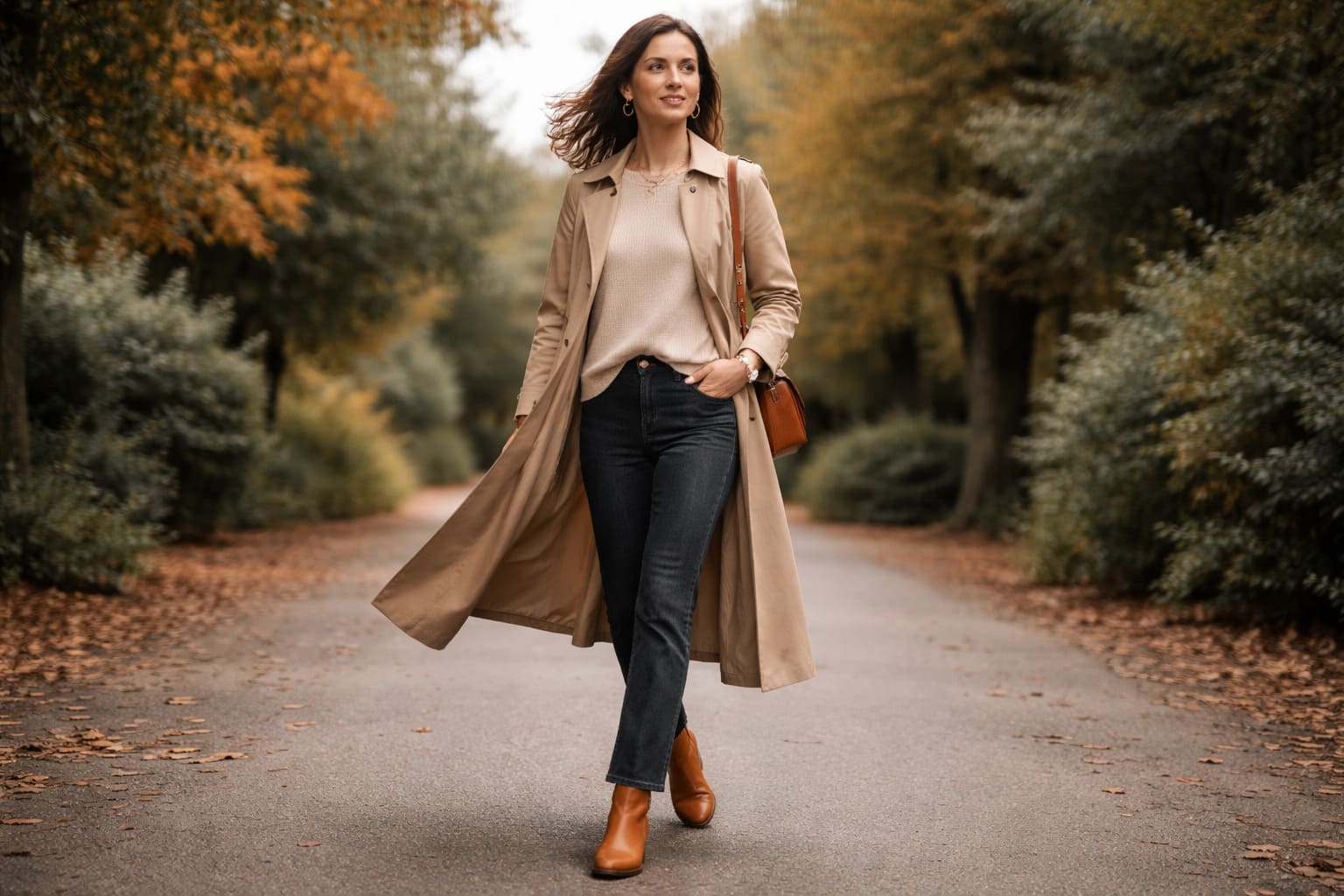
Transitional Dressing: Outfits That Work Between Seasons
You know those weeks. It's 50 degrees in the morning, 75 by afternoon, and raining by evening. Your weather app shows a sun, a cloud, and a raindrop all at once, like even it doesn't know what's happening. You stand in front of your closet thinking: What season is this, exactly?
Welcome to transitional weather — that frustrating stretch between seasons when nothing in your wardrobe feels quite right. Your summer clothes are too light. Your winter clothes are too heavy. Your fall jacket is either too warm at noon or not warm enough at 7 PM.
Most women just suffer through these weeks in ill-fitting outfits, waiting for the weather to commit. But transitional dressing is actually a skill — and once you master it, these in-between weeks become some of your most stylish.
The Transitional Mindset: Think in Systems, Not Outfits
The mistake most people make with transitional dressing is trying to find one perfect outfit for unpredictable weather. That outfit doesn't exist. What works is a system of adaptable layers that you can add, remove, and adjust throughout the day.
Think of your outfit as having three states:
- Morning mode: All layers on, prepared for the chill
- Midday mode: Outer layer removed, middle and base only
- Evening mode: Outer layer back on, maybe with an added accessory
For this to work, each state needs to look intentional. You can't just pile on random layers in the morning and strip them off haphazardly. Each version of your outfit needs to stand on its own.
The Transitional Wardrobe: 12 Pieces That Bridge Every Season
1. The Lightweight Trench Coat
If you own one piece of transitional outerwear, make it a trench. A classic trench coat — unlined or with a removable lining — works from about 50 to 70 degrees, covers you in rain, and looks polished over literally everything.
Key features to look for: Water-resistant cotton (not plastic-feeling polyester), a waist belt for shape definition, a length that hits between mid-thigh and knee, and a collar that can be popped or laid flat.
Everlane's Modern Trench is excellent and reasonably priced. COS does a beautiful relaxed-fit version. For a splurge, Burberry remains the gold standard for a reason.
2. The Cotton or Lightweight Wool Blazer
A blazer in a lighter weight than your winter versions — cotton twill, unlined wool, or a wool-linen blend — is the perfect transitional middle layer. It adds structure and polish without the warmth of a full coat.
3. The Long-Sleeve Cotton Tee
The transitional base layer of choice. Not as warm as a sweater, not as cold as a regular tee. Layer it under a blazer in the morning, wear it solo by afternoon.
4. The Lightweight Knit — Merino or Cotton
A thin sweater in merino wool or cotton knit bridges the gap between tee and heavy sweater. It's warm enough for a cool morning, light enough that you won't overheat indoors.
Everlane's organic cotton crew and Vince's featherweight cashmere are both excellent transition-season options.
5. The Midi Skirt
A midi skirt in a medium-weight fabric (cotton twill, crepe, lightweight wool) works with bare legs and sandals in warm spells, and with tights and boots when it cools down. It's one piece that spans at least three months of transitional weather.
6. The Straight-Leg Jean in a Medium Wash
The most versatile transitional bottom. Dark enough for fall vibes with a sweater, light enough for spring energy with a white tee. Straight-leg fits work with both sandals and boots, making them weather-flexible.
7. Wide-Leg Trousers in a Neutral
These replace jeans when you need something more polished. In a flowy fabric, they work for warm days; add tights underneath on cold ones (nobody will know).
8. The Vest (Knit or Tailored)
A vest adds a layer of warmth to your core without overheating your arms. In transitional weather, when your torso might be cold but your arms are fine, a vest is genius. Layer over a long-sleeve tee or button-down.
9. The Lightweight Scarf
A cotton, modal, or silk scarf is the ultimate transitional accessory. Worn around your neck, it adds warmth during cool mornings. Tucked in your bag, it weighs nothing and takes up no space. Tied on your bag, it's a style detail.
10. The Ankle Boot
The ankle boot bridges summer-to-fall and winter-to-spring effortlessly. Low-heeled, in leather or suede, it works with cropped pants, midi skirts, dresses, and jeans.
11. The Shirt Jacket (Shacket)
A flannel or cotton shirt jacket is essentially a shirt-weight layer you wear as outerwear. Perfect for those days that start at 55 and end at 70. Wear it buttoned as a jacket in the morning, open as a layering piece by afternoon, tied around your waist if it gets warm.
12. The Wrap or Kimono Cardigan
A longer, open-front cardigan or wrap sweater is a transitional workhorse. It's more elegant than a hoodie, lighter than a coat, and can be worn all day indoors without looking like you forgot to take off your jacket.
Transitional Outfit Formulas
Summer-to-Fall Transition (When It's Still Warm-ish)
Formula: Summer dress + ankle boots + light jacket
Take the cotton or linen dress you wore all summer, swap the sandals for ankle boots, and add a lightweight jacket (denim, blazer, or trench). You've just extended that dress's season by two months.
Formula: Jeans + cotton tee + blazer + sneakers
The blazer does all the heavy lifting. Cool in the morning? Button it. Warm by lunch? Drape it over your chair. Evening dinner? Put it back on.
Fall-to-Winter Transition (When It's Getting Cold But Not Freezing)
Formula: Turtleneck + vest + wool trousers + ankle boots
The vest-over-turtleneck combination is ideal for days when a full sweater is too warm but a tee is too cold.
Formula: Knit dress + trench + tall boots + scarf
The trench isn't warm enough for true winter, but for those November days in the 45-55 range, it's perfect layered over knitwear.
Winter-to-Spring Transition (When There's Hope But Not Warmth)
Formula: Long-sleeve tee + light cardigan + spring jacket + jeans
Triple layering with lightweight pieces gives you maximum flexibility. Shed the jacket by afternoon, the cardigan by mid-afternoon, and you're in a long-sleeve tee by the time the sun hits your face.
Formula: Cotton trousers + lightweight sweater + trench
Spring-weight fabrics with a fall-weight layer. You look forward-facing (spring!) while staying warm (reality).
Spring-to-Summer Transition (When It's Unreliable)
Formula: Midi skirt + cotton tee + denim jacket
If it gets hot, the jacket comes off and you have a summer outfit. If it cools down, the jacket goes back on. The midi skirt bridges both temperatures.
Formula: Linen pants + silk blouse + cardigan
The silk is cool enough for warm spells, the cardigan handles the chill, and the linen breathes no matter what.
The Color Strategy for Transition Seasons
Transitional seasons have their own color palettes, and leaning into them makes your wardrobe feel current rather than leftover.
Summer-to-Fall Colors
Ease out of summer brights and into warmer tones: olive, rust, warm browns, dusty pink, muted terracotta. These feel autumnal without being dark.
Winter-to-Spring Colors
Lighten up gradually: soft greys, pale blue, sage green, cream, lavender. You don't have to jump straight into pastels — just move away from the deepest winter darks.
The Universal Transitional Neutrals
- Camel: Works year-round but feels especially right in transition seasons
- Cream: Bridges winter whites and summer brights
- Olive: Cool enough for summer-to-fall, warm enough for spring
- Soft grey: Neither winter-dark nor spring-bright — perfectly in-between
Practical Tips for Unpredictable Weather
Check the hourly forecast, not the daily one. The daily forecast might say 65 degrees, but if it's 48 at 8 AM and 72 at 2 PM, you need a different strategy than a single "65-degree outfit."
Keep a jacket at your desk or in your car. A blazer, a cardigan, a light jacket — having an extra layer accessible means you can dress lighter in the morning without worrying about the afternoon.
Invest in a good bag. Transitional dressing means carrying layers. A tote or structured shoulder bag that can hold a folded blazer or a scarf without looking overstuffed is a practical necessity.
Swap your accessories before your clothes. One of the easiest ways to transition your wardrobe between seasons is to swap accessories first. Switch summer straw bags for leather. Trade sandals for loafers. Change light scarves for knit ones. These small changes shift the season of your outfit without requiring a whole new wardrobe.
Building Your Personal Transition Strategy
Every body runs at a different temperature. Some women are freezing at 60 degrees; others are comfortable in a tee. There's no universal transitional outfit — only the one that works for your body and your daily routine.
This is honestly one of the best uses of a tool like FreeDiva's AI stylist. When you're not sure how to adapt your existing wardrobe to shifting weather, getting personalized suggestions based on your body type and style preferences can save you from that "nothing works" frustration that transitional weeks always bring.
The Bottom Line
Transitional dressing isn't about having a magical piece that works in every temperature. It's about building a system of adaptable layers — pieces that work together, look good independently, and can be added or removed as the day demands.
Master the twelve pieces in this guide, practice the formulas, and you'll never again stand helplessly in front of your closet during those in-between weeks. You might even start looking forward to them — because transitional dressing, when done well, is some of the most creative and satisfying styling there is.
Want Personalized Outfit Recommendations?
Upload a photo and let our AI stylist create complete outfits tailored to your body type, skin tone, and personal style.
Try AI Stylist