The conventional job interview outfit — a matching suit, neutral blouse, closed-toe pumps — worked beautifully in a world where every office looked roughly the same. That world no longer exists. A woman interviewing at a tech startup in Austin is dressing for a completely different environment than one walking into a law firm in Manhattan or a creative agency in Brooklyn.
The challenge isn't just looking professional. It's looking like you understand the culture you're trying to join. Showing up to a casual tech company in a power suit signals that you didn't do your research. Showing up to a finance firm in joggers signals the same thing. Getting it right requires reading the room before you're even in it.
The Universal Principles (That Still Apply Everywhere)
Before we get industry-specific, a few principles hold true regardless of where you're interviewing:
Fit is non-negotiable. Nothing undermines confidence faster than tugging at a too-tight skirt or swimming in an oversized blazer. Everything should fit cleanly — not tight, not baggy, just right. If you need to buy something new, get it a few days early and have it tailored if necessary.
One step above. The classic advice still works: dress one level above the company's daily dress code. If they wear jeans and tees, you wear smart casual. If they wear business casual, you wear polished professional. If they wear suits, you wear your best suit.
Grooming matters more than garments. Clean, pressed clothes. Polished shoes (or at least unscuffed ones). Hair that looks intentional. Nails that are neat. These details communicate care and attention — qualities every employer values.
Comfort enables confidence. If you're uncomfortable, it shows. Fidgeting with a neckline, wobbling in new heels, overheating in a heavy blazer — all of these distract you from the conversation. Wear something you've worn before and feel great in. An interview is not the day to debut new shoes.
Tech Industry: Smart Casual With a Polish
Tech companies have largely abandoned formal dress codes, but "casual" doesn't mean careless — especially in an interview. The goal is to look put-together and competent without seeming stiff or out of touch with the culture.
What Works
- Tailored trousers (not suit pants) with a quality knit top or silk blouse. Think Everlane's Way-High pants or Theory's clean-front trousers paired with a cashmere crew neck or a tucked-in silk shell.
- A blazer in a soft fabric. A knit blazer, an unstructured linen-blend blazer, or a cotton blazer in navy, gray, or a muted color. This says "I know this is important" without saying "I'm attending a board meeting."
- Dark jeans (in some cases). At very casual startups, dark-wash jeans with a nice top and blazer can work. But only if you have strong intel that the office is genuinely casual. When in doubt, opt for trousers.
- Clean sneakers or loafers. White leather sneakers (Veja, Common Projects) or leather loafers work at most tech companies. Heels are optional and can feel overdressed in a sneakers-and-hoodies office.
What Doesn't Work
- A full matching suit (reads as "I don't understand this culture")
- Anything too casual — athleisure, visible graphic tees, flip-flops
- Heavy makeup or overly polished styling (signals mismatch with tech casual)
The Outfit
Wide-leg navy trousers from COS, a cream silk blouse from Everlane, an unstructured blazer in a soft gray, leather loafers, minimal gold jewelry. Professional, modern, and culturally appropriate.
Finance and Law: The New Power Suit
Finance and law are still among the most formally dressed industries, but even here, the rigid matching suit is evolving. The new standard is "pulled-together authority" — which still includes suiting but with more personality.
What Works
- A suit, but make it modern. Slim-cut trousers (not wide or flared) with a matching or coordinating blazer. The fit should be streamlined but not tight. Theory, Hugo Boss, and Reiss make excellent modern suits for women.
- A dress with a blazer. A sheath dress or a structured wrap dress in a solid color, topped with a blazer. This is polished, feminine, and authoritative without being masculine.
- Pointed-toe pumps or structured flats. Heel height is a personal choice, but pointed toes read more professional than round toes in these environments. Stuart Weitzman's block heels are a practical option — professional-looking with genuine comfort.
- Strategic color. Navy, charcoal, black, and deep burgundy are safe bets. A blouse in a richer color (emerald, sapphire, deep rose) under a neutral suit adds personality without risk.
What Doesn't Work
- Trendy or fashion-forward pieces (save the avant-garde for after you're hired)
- Visible cleavage or very short hemlines
- Heavy fragrance (more people will comment negatively than positively)
- Casual shoes of any kind — sneakers, mules, or open-toed sandals
The Outfit
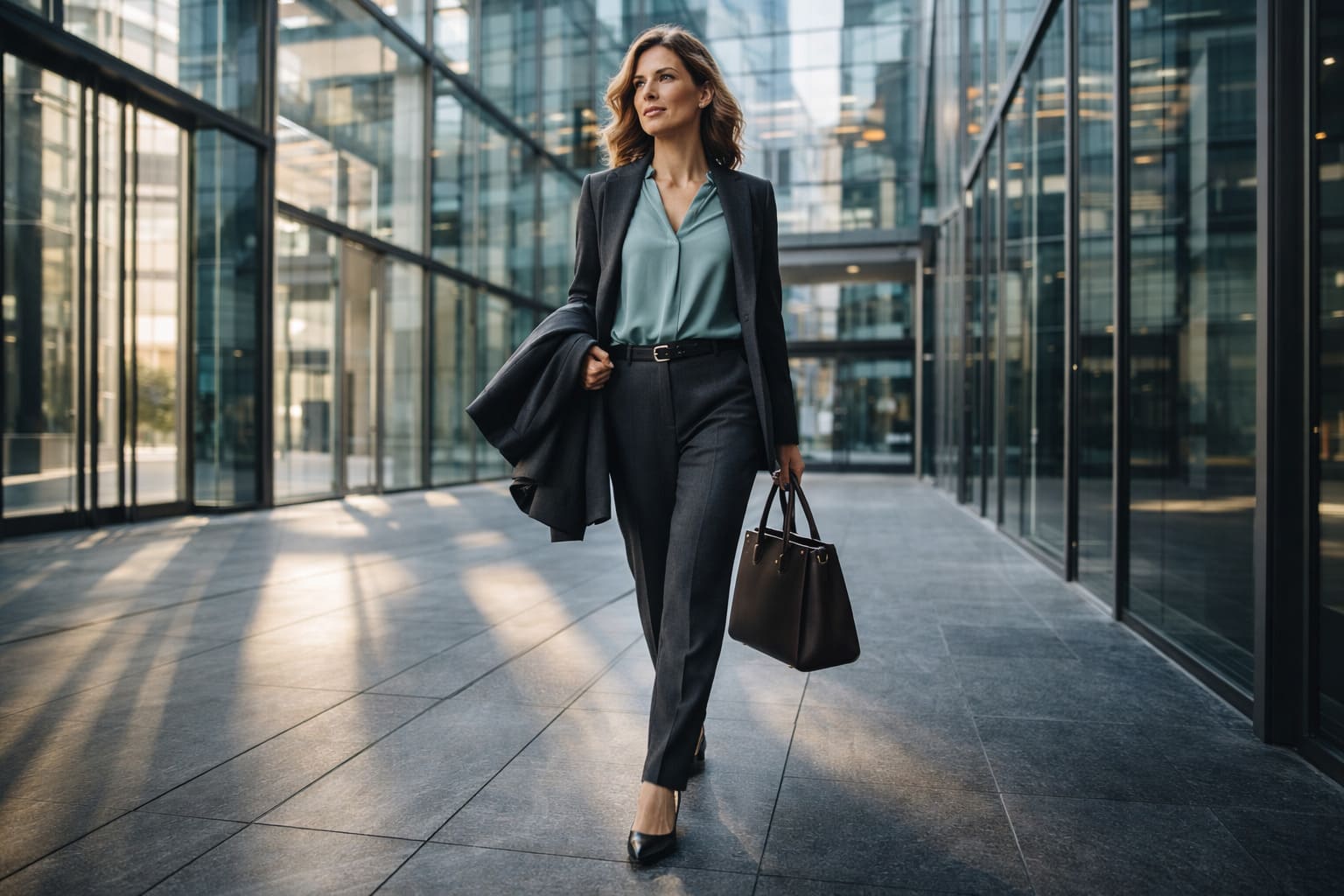
A charcoal suit from Theory with a tailored fit, a silk blouse in deep teal, pointed-toe block heels from Stuart Weitzman, small gold hoop earrings, a structured leather bag. You look like you already work there — in a senior role.
Creative Industries: Show Your Point of View
Creative fields — advertising, design, media, fashion, entertainment — are the one arena where your outfit is genuinely part of your interview. How you present yourself is a signal of your aesthetic judgment, your awareness of culture, and your ability to communicate visually.
What Works
- A statement piece anchoring a polished outfit. One interesting element — a printed blazer, architectural earrings, a bold shoe — surrounded by clean, well-fitting basics. This shows you have a point of view without looking like you're trying too hard.
- Interesting textures and silhouettes. A draped top, a structured midi skirt, a cropped wide-leg trouser. Creative industries appreciate visual interest, so straight-down-the-middle basics can actually work against you.
- Color. Where finance values neutrals, creative fields welcome color. A bright blouse, a printed scarf, shoes in an unexpected hue — these all signal confidence and creative thinking.
- Accessories that tell a story. Vintage jewelry, a beautiful watch, a unique bag — these are conversation starters and personality signals.
What Doesn't Work
- Head-to-toe neutrals (reads as timid in a creative environment)
- A corporate suit (unless the creative company has a formal culture — some do)
- Anything that looks like you're wearing a costume rather than clothes you genuinely love
The Outfit
High-waisted wide-leg trousers from Sezane in a rich olive, a fitted black turtleneck, a patterned blazer from a vintage shop or Scotch & Soda, ankle boots, layered gold necklaces, a leather portfolio bag. You look creative, intentional, and confident.
Healthcare and Education: Approachable Authority
In healthcare and education, the goal is to look competent and trustworthy without creating distance. You need authority, but you also need warmth.
What Works
- Soft tailoring. A blazer in a warm color, dress pants in a modern cut, a blouse that isn't too stiff or formal. The vibe is "I'm competent and approachable."
- Dresses and skirts. A knee-length dress with a cardigan or blazer works beautifully. The silhouette is professional without being corporate.
- Comfortable, professional shoes. You might be walking hallways, standing in classrooms, or touring a facility. Block heels, loafers, or professional flats are ideal.
- Warm colors. Navy, burgundy, forest green, camel — colors that communicate competence and approachability.
The Outfit
A navy wrap dress from Boden or Sezane, a camel cardigan, comfortable leather flats from Cole Haan, pearl studs, a structured tote. Warm, professional, and practical.
Remote/Video Interview: The Screen Changes Everything
Video interviews have their own rules, and they're different from in-person:
Solid colors photograph better. Patterns (especially fine stripes and small prints) can create a moiré effect on camera — a distracting visual vibration. Stick with solid colors in medium tones.
Jewel tones pop on screen. Sapphire, emerald, ruby, and amethyst all look beautiful on camera across most skin tones. Avoid white (blown out by lighting) and black (can look flat and absorb you into a dark background).
Neckline matters more than ever. The camera frames you from the chest up, so your neckline is the most visible part of your outfit. A clean V-neck, a boat neck, or a collared blouse all frame the face nicely.
Earrings are your statement piece. Since most of your outfit isn't visible, earrings become your primary accessory. Choose something that reflects your personality — studs for minimalism, small hoops for warmth, a drop earring for creativity.
Don't forget the bottom half. Yes, you should wear actual pants. There's always a chance you'll need to stand up.
The Accessories That Complete the Look
Regardless of industry, a few accessories consistently elevate interview outfits:
A quality bag. It doesn't need to be designer, but it should be structured, clean, and large enough to hold your essentials and any documents. Cuyana and Polene make beautiful, understated bags at reasonable prices.
A watch. In a world of phones, a watch signals intentionality and polish. It doesn't need to be expensive — a clean-faced watch from Nordgreen or Daniel Wellington works perfectly.
Minimal, intentional jewelry. Studs or small hoops, a simple necklace, and possibly a ring or bracelet. The goal is polished, not decorated.
A portfolio or padfolio. Even if you don't need to present anything, arriving with a professional portfolio that holds your resume and a notepad looks organized and prepared.
The Night-Before Checklist
- Try on your complete outfit, including shoes and accessories.
- Check for wrinkles, lint, loose threads, and stains.
- Make sure everything fits comfortably when sitting and standing.
- Check your outfit in the mirror and from behind.
- Pack your bag with everything you'll need.
- Lay everything out so there are zero decisions in the morning.
What If You're Starting From Scratch?
If you're re-entering the workforce or pivoting industries and your interview wardrobe is nonexistent, here's the minimum viable collection:
- One pair of modern trousers that fits perfectly (tailored if needed)
- Two tops — one blouse, one quality knit
- One blazer in a versatile color
- One dress that works with and without a jacket
- Two pairs of shoes — one closed-toe professional, one polished flat
Six pieces, multiple combinations, every industry covered. Everlane, COS, and Theory are reliable starting points across all of these categories.
And if you're not sure which combination works best for your specific industry and body, FreeDiva's AI chat stylist can help you plan the outfit. Tell it the industry, the dress code, and your body type, and it will suggest specific combinations — no photo upload needed for the chat feature.
The Bottom Line
The best interview outfit isn't the most expensive or the most fashionable. It's the one that makes you feel confident, competent, and like you belong in the room. Everything else — the fabric, the fit, the color — exists in service of that feeling.
Dress like you already have the job. Then go get it.
Want Personalized Outfit Recommendations?
Upload a photo and let our AI stylist create complete outfits tailored to your body type, skin tone, and personal style.
Try AI Stylist