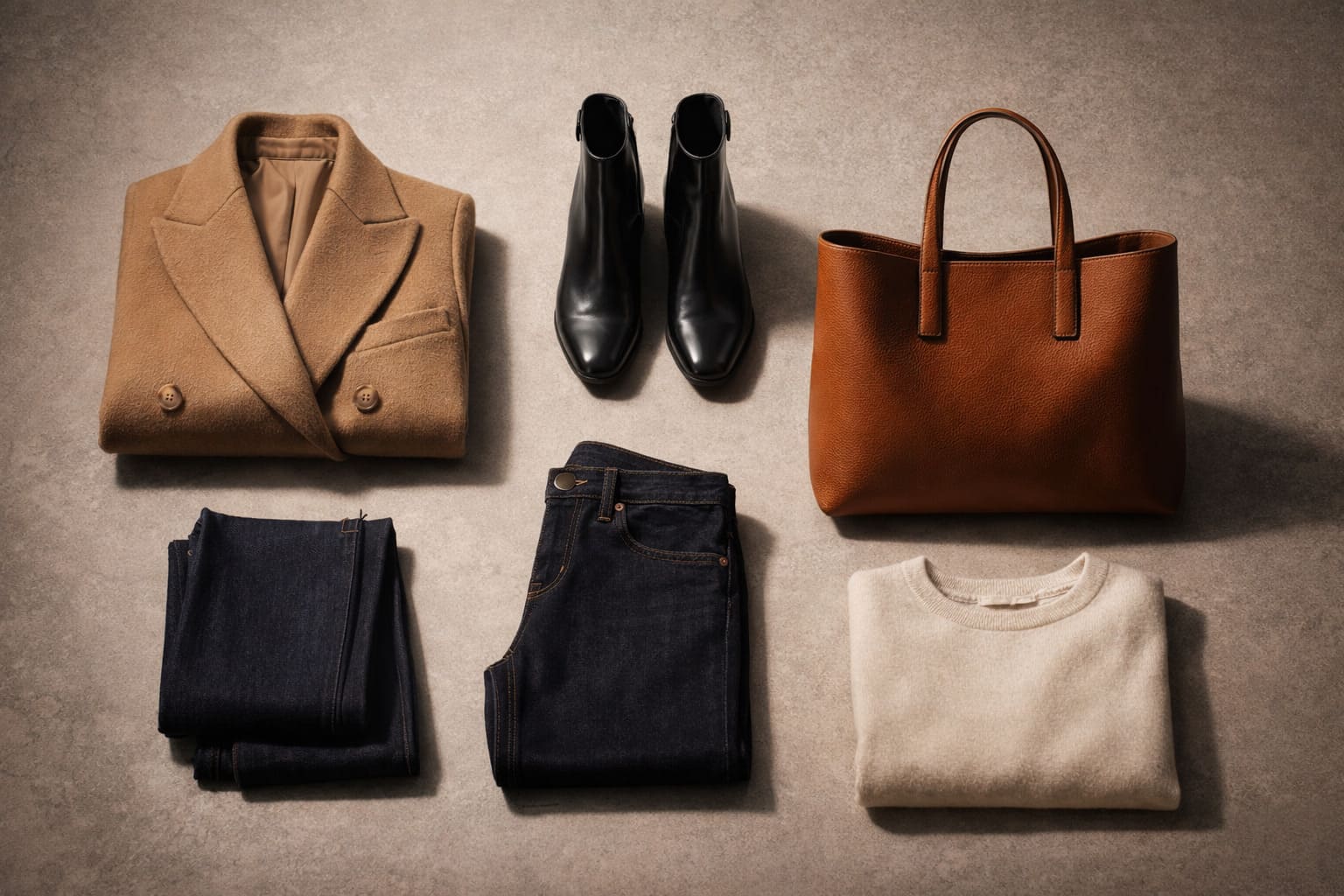
Fashion editors have a dirty secret: they don't buy that much. Not relative to how much fashion they see, touch, evaluate, and write about every day. The women who spend their careers surrounded by clothing develop a very specific superpower — they know exactly which pieces are worth real money and which are a waste of it.
The result is a wardrobe that looks expensive without being extravagant. They invest heavily in a handful of pieces and spend almost nothing on everything else. It's not about being rich. It's about being strategic.
Here's what they actually spend their money on — and why.
The Investment Piece Philosophy
An investment piece isn't just "something expensive." It meets three criteria:
-
Longevity: It won't date. It looked good five years ago, it looks good now, and it'll look good five years from now. Classic design, quality construction, durable materials.
-
Versatility: It works across multiple occasions, seasons, and outfits. A piece that only goes with one outfit isn't an investment — it's a liability.
-
Joy: You love wearing it. It makes you feel confident, polished, and like yourself. If a piece checks boxes one and two but you don't reach for it, it's not earning its place.
The cost-per-wear calculation makes this concrete: divide the purchase price by the number of times you'll wear it. A $400 leather jacket worn twice a week for five years is $0.77 per wear. A $60 trendy top worn three times is $20 per wear. The "expensive" piece is the bargain.
The Pieces Worth Every Dollar
1. A Leather Jacket
Why it's worth it: A good leather jacket lasts decades. Literally. The leather softens and molds to your body over time, developing a patina that can't be replicated. It goes with jeans, dresses, trousers, and skirts. It works in spring, fall, and mild winters. It crosses every style boundary — classic, edgy, romantic, minimal.
What to look for:
- Real leather (lamb for softness, cow for durability)
- Clean hardware in silver or gold (not both)
- A fit that's snug but allows a sweater underneath
- Classic style: moto, bomber, or minimal collarless
Brands worth the investment:
- AllSaints ($400-600) — The Balfern is the modern classic moto jacket. Lamb leather, flattering cut, countless colorways.
- Sézane ($500-700) — French-girl leather jackets with beautiful detailing and softer silhouettes.
- IRO ($800-1,200) — Premium lamb leather with fashion-forward cuts. These age beautifully.
- The Row ($2,000+) — If budget is no object, their leather pieces are museum-quality.
What to skip: Faux leather at premium prices. Good faux leather exists (Nanushka does it well), but it doesn't age — it degrades. If you're spending more than $200, spend it on real leather.
2. A Tailored Blazer
Why it's worth it: A blazer transforms everything it touches. Jeans and a tee become polished. A dress becomes professional. Trousers become authoritative. A great blazer is the single most versatile piece in any woman's wardrobe after 35.
What to look for:
- Wool or wool-blend fabric (not polyester, which traps heat and looks cheap)
- A slightly relaxed fit — not boxy, not skin-tight
- Functional buttons and real pockets
- Lined interior (half-lined at minimum)
- A length that hits at the hip
Brands worth the investment:
- Theory ($400-550) — Consistently excellent blazers in quality wool with modern cuts. Their Etiennette is a bestseller for a reason.
- Veronica Beard ($600-700) — Known for the Dickey Jacket, which has removable hoodie inserts. Versatile and cool.
- Sézane ($250-400) — French cuts at a more accessible price point. Beautiful fabrics and feminine details.
- COS ($200-350) — Minimalist, architecturally clean blazers that punch above their price point.
Where to save: H&M and Zara make serviceable blazers for under $80 that work as stop-gaps while you save for the real thing. They won't last as long, but they'll teach you what fit and style you prefer.
3. Quality Denim
Why it's worth it: You wear jeans more than almost anything else. Cheap denim stretches out, fades unevenly, and loses its shape after a few washes. Premium denim maintains its fit, its color, and its structure for years. The comfort difference alone is worth the price.
What to look for:
- 98-100% cotton with no more than 2-3% elastane
- A rigid but not stiff hand feel
- Clean, finished interior seams
- Hardware that doesn't rust or tarnish
- A high rise that stays up without constant pulling
Brands worth the investment:
- AGOLDE ($180-220) — The brand that redefined premium denim for the current era. The '90s Pinch Waist and the Riley are iconic fits.
- Citizens of Humanity ($200-250) — Consistently flattering with excellent fabric quality. The Rocket and Charlotte are favorites.
- Mother ($220-260) — Slightly more fashion-forward washes and fits. The Hustler and The Looker are staples.
- Frame ($200-250) — Great straight-leg and wide-leg options. Le Garcon is a modern classic.
Where to save: Levi's ($60-100) remain excellent at their price point. The Ribcage, the Wedgie, and the '70s High Rise are legitimately good jeans.
4. A Cashmere Sweater
Why it's worth it: Nothing else feels like real cashmere. It's warm without bulk, soft without pilling (when quality is high), and it drapes in a way that no cotton or synthetic can replicate. A well-cared-for cashmere sweater lasts a decade or more.
What to look for:
- 100% cashmere (not "cashmere blend" which often means 10% cashmere, 90% synthetic)
- Two-ply construction minimum (single-ply is too thin and pills faster)
- A tight, even knit — hold it up to light; you shouldn't see much daylight through it
- Classic style: crewneck or V-neck in a neutral color first
Brands worth the investment:
- Naadam ($150-250) — Ethically sourced Mongolian cashmere at a fair price. Their Essential Sweater is the entry point.
- Jenni Kayne ($300-400) — Beautiful colors and a relaxed, California-luxury aesthetic.
- COS ($150-200) — Clean, minimalist cashmere that competes with brands twice the price.
- The Row ($800+) — The ultimate in cashmere quality if budget permits.
Where to save: Everlane's Grade-A Cashmere ($130) is the best budget option. Uniqlo's cashmere ($100) is decent for the price but thinner.
5. Everyday Shoes
Why they're worth it: Your feet carry you everywhere, and your shoes are noticed more than you think. Cheap shoes look cheap. They also destroy your feet, your posture, and your mood. Quality everyday shoes are an investment in how you feel as much as how you look.
What to look for:
- Real leather (upper and sole)
- Cushioned insoles or the ability to add custom insoles
- Construction that can be resoled (stitched, not glued)
- A style that works with 80% of your wardrobe
Specific investments worth making:
Loafers: The shoe that works with everything from tailored trousers to dresses to jeans. G.H. Bass Weejuns ($100-150) are the classic. Mansur Gavriel ($400-500) makes beautiful modern versions. Sézane ($200-300) offers a feminine French take.
Ankle boots: The three-season shoe. Rag & Bone ($400-500) makes the definitive modern ankle boot. Stuart Weitzman ($400-500) offers comfort and elegance. Aquatalia ($400-500) are waterproof without looking like rain boots.
White sneakers: Veja Esplar ($120) are the sustainable-cool option. Common Projects Achilles ($400+) are the minimalist gold standard. Koio Capri ($280) splits the difference beautifully.
6. A Quality Bag
Why it's worth it: Your bag is the most visible accessory you carry every day. A quality leather bag develops a beautiful patina, holds its shape, and signals taste without logos or flash. It's also the item that takes the most physical abuse — cheap bags show their cheapness within months.
What to look for:
- Full-grain leather (not bonded or faux)
- Clean, sturdy hardware
- Solid stitching (even, tight, no loose threads)
- A structured shape that doesn't collapse when empty
- A size that fits your daily essentials without being a suitcase
Brands worth the investment:
- Polène ($300-500) — The best value in quality leather bags right now. French design, beautiful leather, reasonable prices.
- Cuyana ($200-400) — Classic shapes, quality materials, and a focus on pieces that last.
- Mansur Gavriel ($400-700) — The bucket bag that launched a thousand waitlists. Simple, beautiful, well-made.
- DeMellier ($400-600) — British brand with elegant, structured designs.
- A.P.C. ($400-600) — French minimalism at its most refined. The Demi-Lune is iconic.
The luxury question: Is a $2,000+ designer bag worth it? Sometimes. A classic Celine, Saint Laurent, or Bottega Veneta bag in a timeless style holds its value and can last twenty years. A trendy logo bag that screams its season? Rarely worth it. If you're going luxury, go classic.
7. A Great Coat
Why it's worth it: Your coat is the first thing people see from October through March. It sets the tone for your entire outfit. A cheap coat looks cheap no matter what's underneath it. A quality coat elevates everything.
What to look for:
- Wool or wool-cashmere blend (at least 80% wool)
- Full lining
- A style that works over blazers and sweaters without being too bulky
- A length that flatters your proportions (usually mid-thigh to knee)
Brands worth the investment:
- Max Mara ($1,500-3,000+) — The Madame, the Manuela, the 101801 Icon. These are the most famous coats in fashion for good reason. If you can afford one, it will last your lifetime.
- COS ($250-450) — The best quality-to-price ratio in coats. Their wool coats compete with brands three times the price.
- Vince ($500-800) — Luxurious fabrics and clean, modern silhouettes.
- Sézane ($350-600) — Beautiful French-designed coats with feminine details.
Where to Save (And Feel Good About It)
Not everything needs to be premium. Here's where spending less makes perfect sense:
Trend pieces: If it's a trend you want to try, buy it cheap. Zara, H&M, and Mango produce trend-driven pieces that serve their purpose for one or two seasons.
Basic tees: Uniqlo's SupimaCotton tees ($15) are genuinely excellent. So are Target's A New Day basics.
Workout clothes: Athleta and Old Navy's active lines perform comparably to premium brands at a fraction of the price.
Pajamas and loungewear: Target, Aerie, and Amazon Essentials make perfectly comfortable sleep and lounge clothes.
Summer sandals: Unless you're buying leather sandals you'll wear for years, seasonal sandals from Madewell or Target are fine.
The Investment Timeline
You can't buy everything at once, and you shouldn't. Here's a prioritized investment order based on impact and versatility:
Year 1: Quality jeans + a blazer + everyday shoes Year 2: A leather jacket + a quality bag Year 3: A winter coat + cashmere sweaters
FreeDiva's AI stylist can help you prioritize by analyzing which silhouettes and pieces will have the greatest impact on your specific body and style, so you invest in the right pieces first rather than following a generic list.
The Real Return on Investment
Investment pieces change how you get dressed. When you own a blazer that makes you feel powerful, you reach for it instinctively. When your jeans fit perfectly, you build outfits around them effortlessly. When your bag is beautiful, you carry yourself differently.
The return isn't just financial (though the cost-per-wear math does work in your favor). It's psychological. A wardrobe built on a foundation of quality pieces eliminates the daily friction of "I have nothing to wear" and replaces it with the quiet satisfaction of "everything I have works."
That satisfaction is worth every dollar you spent getting there.
Want Personalized Outfit Recommendations?
Upload a photo and let our AI stylist create complete outfits tailored to your body type, skin tone, and personal style.
Try AI Stylist