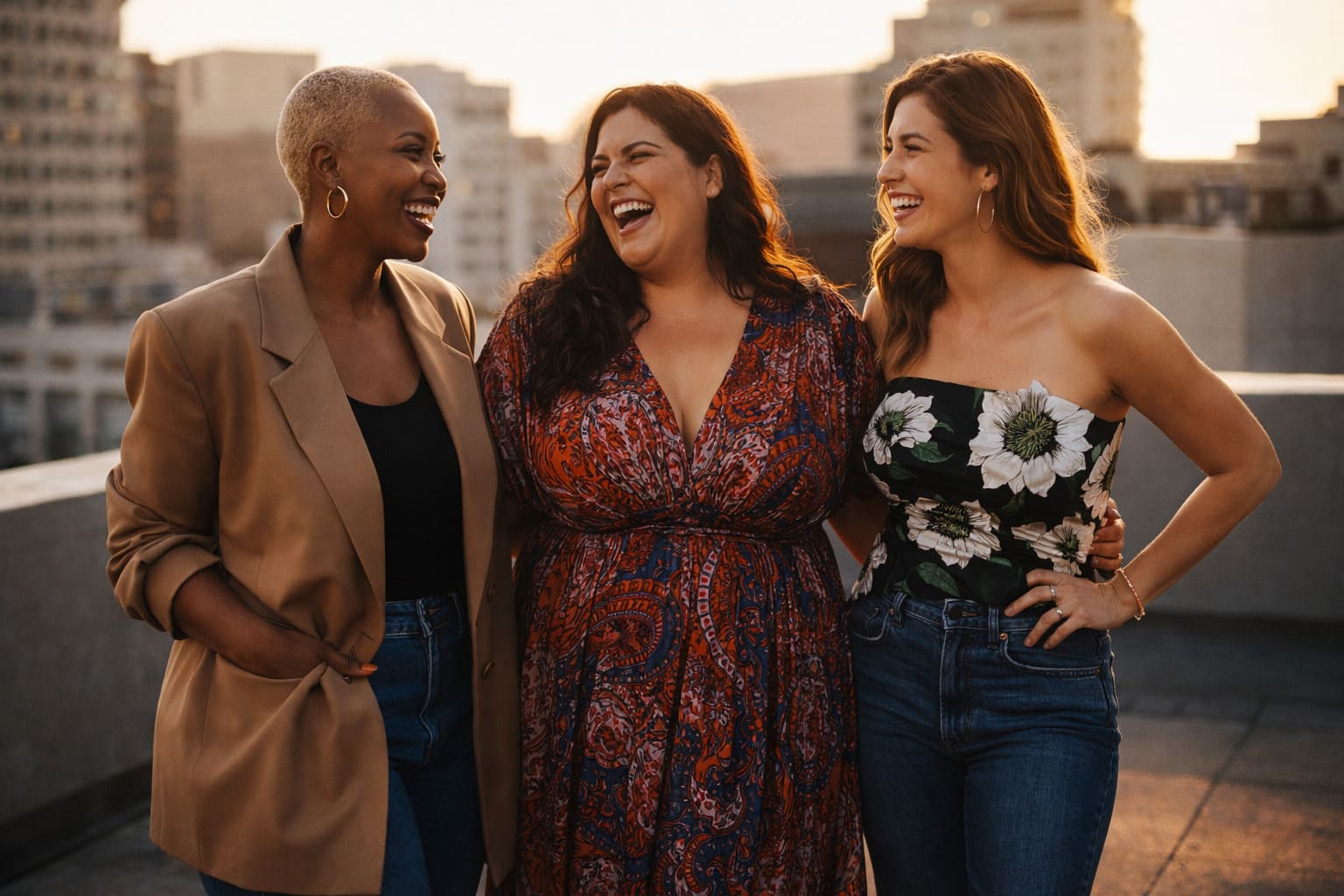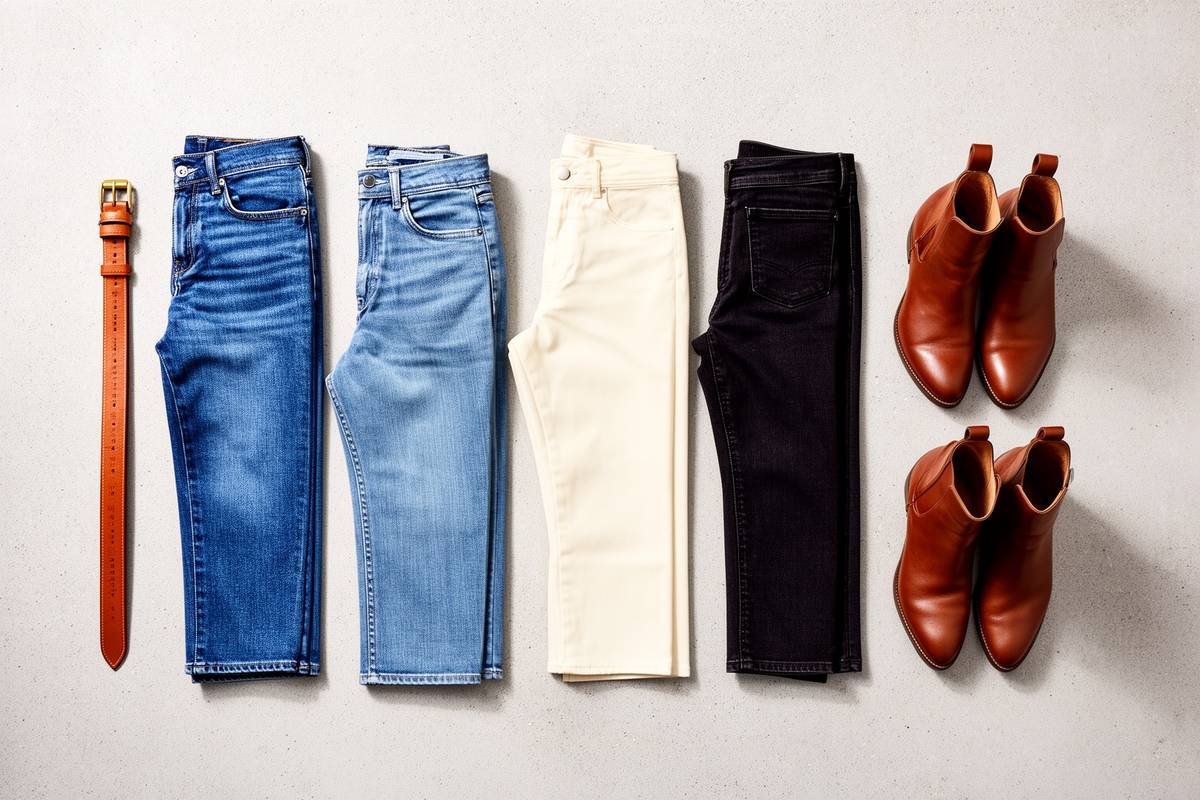
Buying jeans is the worst shopping experience in womenswear and it is not your fault. Sizing is inconsistent between brands and sometimes between washes of the same style. The fit models are not shaped like most people. And the thing that actually determines whether a pair of jeans works on you is not the size on the label, it is four measurements nobody prints anywhere.
So here is the method: the four fit points that matter, how to diagnose which one is failing, which of the current shapes suit which body, and how to shop so you leave with one pair that works instead of six maybes.
The Four Fit Points
Almost every pair of jeans that does not work fails at one of these four places. Learning to name which one changes everything, because then you are looking for a cut instead of hoping.
1. The Rise
The distance from the crotch seam to the top of the waistband. This is the single most important measurement and the one most people never check.
Too short for you: the waistband sits below your natural waist and digs in, flesh pushes over the top, and the whole thing slides down when you sit. The fix is a higher rise, not a larger size, which is the most common and most expensive mistake in denim shopping.
Too long for you: the waistband hits your ribs, the crotch hangs low, and there is excess fabric pooling at the front. The fix is a mid rise.
How to shop for it: measure a pair you own that fits well, from the crotch seam straight up to the top of the waistband. Most product pages list the front rise in inches. Match that number and you have eliminated most of the field.
2. The Waist-to-Hip Gap
The reason you can get jeans over your hips and then stand there with a two-inch gap at the back of the waistband.
This is a proportion issue, not a size issue: the difference between your waist and your hip measurement is bigger than the brand assumed. Stretch denim with a contoured waistband, a curve-specific fit, or a yoke cut with a deeper V at the back all solve it. So, cheaply and permanently, does a tailor taking in the back waist for about $20, which is the best money in your whole wardrobe.
3. The Thigh
Denim that pulls into horizontal lines across the front of the thigh is too tight there, regardless of what the waist is doing. Whiskering that appears the moment you stand still means the fabric is under tension.
If this is your recurring problem, you want a straight or wide leg cut from the hip rather than a slim leg, and you want to check the fabric: 1 to 2 percent elastane keeps the shape, while 0 percent in a slim cut will be uncomfortable all day.
4. The Length
The most-ignored and the easiest to fix. Length changes the apparent length of your legs more than any other variable in denim.
The rules that hold: a wide leg should end within half an inch of the floor at the back with the shoes you will actually wear. A straight leg should break just at the top of the foot. A cropped jean should end at the narrowest point of your ankle or just above it, never at the thickest part of the calf, which visually cuts the leg at its widest point. Hemming costs $15 and no pair of jeans in your closet should be the wrong length.
The Shapes Worth Knowing Now
The denim conversation has moved on from the extremes. Marie Claire's fall 2026 denim report describes designers working with the cigarette silhouette, a cylindrical leg that tapers at the ankle: the middle ground for anyone who wants a slimmer line without going back to skinny. Meanwhile Who What Wear's list of dated denim trends puts ultra-cropped wide legs, frayed cropped hems and extreme flares on the way out, as the whole category moves toward longer, more elongated proportions.
Straight leg. The default and the most useful jean in existence. Timeless, flattering, works with everything from loafers to boots. If you buy one pair this year, buy a high-rise straight in a clean indigo.
Wide leg. Still at the top of the agenda. The versions worth buying look like tailored trousers rather than like a tent: a clean drape, a defined crease, full length.
Cigarette. A slim cylinder, tapering at the ankle, not clinging. The answer for anyone who wants a narrow leg to tuck into boots.
Subtle bootcut. Quietly becoming a default again, in a gentle construction rather than a dramatic 2003 flare. Excellent for balancing wider hips.
Barrel and balloon. Still around, no longer the main event. Fun if you like them, not where a single-pair budget should go.
Fading: ultra-tight ankle jeans, extreme flares, very baggy fits, and cropped wide legs. None of them are crimes, they just look of a moment that has passed.
On color, the useful news is that it has opened up: ecru, buttermilk and cream are everywhere alongside clean indigo, and a cream wide-leg jean is a genuinely elegant alternative to black trousers in winter.
Which Shape for Which Body
This is where the fit points and the shapes meet.
Hips wider than shoulders, weight in the thighs and seat. High-rise bootcut or wide leg, both of which balance the hip with volume at the ankle. A slim leg that narrows below a full hip exaggerates the difference. Avoid heavy back pocket detail set low. More in the pear shape guide.
Shoulders wider than hips. Almost anything works below the waist, so this is the body that gets to wear the fashion shapes: barrel, balloon, wide leg, cargo detail. Add volume at the bottom freely, as the inverted triangle guide sets out.
Waist, hip and shoulder close in width. Straight leg and wide leg, worn with a tucked top and a belt to create a waist. Avoid a low rise, which removes the only waist definition available. The rectangle guide covers the rest.
Waist clearly smaller than both bust and hip. High-rise straight or bootcut, fitted through the waist and seat, with a contoured waistband. You will likely need the back waist taken in, and it is worth it. See the hourglass guide.
Weight carried around the middle. A high rise with a wide, flat, non-digging waistband and a straight or wide leg. A mid rise that sits exactly on the softest part of the stomach is the least comfortable option available. The apple shape guide goes further.
Short in the leg. A high rise, full length, hemmed precisely, in a single uninterrupted color. A straight leg in a dark indigo with no fading and no cuff, worn with a boot the same depth of color, is the longest leg line available to anyone.
If you have no idea which of these you are, the honest answer is that most self-assessments are wrong, which is exactly why the FreeDiva stylist measures your proportions from a photo rather than asking you to pick a fruit. It reads shoulder, waist and hip width and then builds outfits from there.
How to Shop So It Does Not Ruin Your Day
Go with a reference pair. Bring the jeans you own that fit best, or at least their rise and inseam measurements. Shopping blind is why this takes four hours.
Try one size up and one size down in every style. Vanity sizing makes the number meaningless. The right size is the one where you can sit down without the waistband gapping or digging.
Sit down. Every time. Then squat. A pair that fits standing and cuts you in half sitting is not a pair that fits. You will spend most of your life in these seated.
Check the fabric content. For a slim or cigarette cut, look for 1 to 2 percent elastane with cotton. For a wide or straight leg, 100 percent cotton holds a cleaner line and softens with wear. Above about 4 percent elastane, denim bags out at the knee by lunchtime and never recovers.
Buy for your current body. Not the one from three years ago and not an aspirational one. Jeans that fit the body you have today will get worn every week, and that is the entire point. Body changes after 35 is the longer conversation about this.
Budget for a tailor. Hem $15, back waist $20. Two small alterations turn a decent pair into the pair you reach for every time, and almost nobody does it.
The Two-Pair Answer
If you want to stop thinking about denim entirely: a high-rise straight leg in clean dark indigo, hemmed to just break on your shoe, and a high-rise wide leg in either ecru or a mid blue, hemmed to half an inch off the floor. Between them they cover work, weekends, dinners and travel, and both are current.
For what to put on top, the capsule wardrobe and the fall 2026 shoe trends handle the two ends of the outfit.
Want Personalized Outfit Recommendations?
Upload a photo and let our AI stylist create complete outfits tailored to your body type, skin tone, and personal style.
Try AI Stylist