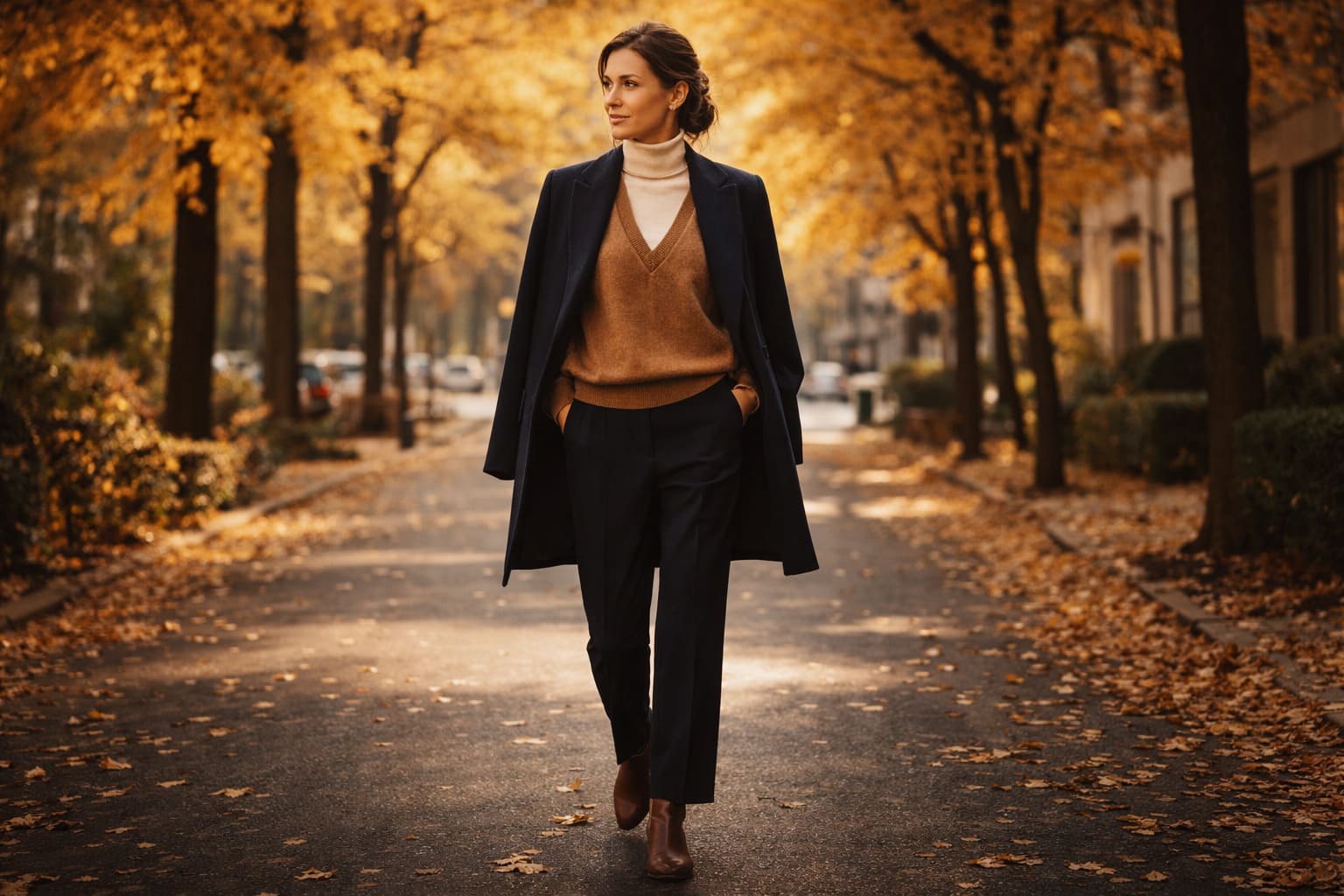
Fall Layering That Actually Looks Intentional
Every September, the same thing happens. You stand in front of your closet, pull out a sweater, a jacket, maybe a scarf, put them all on, look in the mirror, and think: I look like I'm wearing everything I own.
Fall layering is one of those concepts that sounds delightful in theory — cozy textures! Rich colors! Interesting combinations! — and often looks like a mess in practice. The difference between "effortlessly layered" and "couldn't decide what to wear" comes down to a few principles that nobody ever explains clearly.
Until now. Let's break down the actual mechanics of layering so your autumn outfits look intentional, not accidental.
The Three Rules of Layering That Actually Matter
Rule 1: Each Layer Should Be Visible
If you're going to layer, each piece needs to show. A turtleneck completely hidden under a crew-neck sweater isn't layering — it's just being warm. For a layer to count, some part of it should be visible: a collar, a hem, cuffs, or a contrasting neckline.
This means thinking about neckline hierarchy. Your innermost layer should have the highest neckline (a turtleneck, a mock neck, a button-up collar), your middle layer should have a lower neckline (a V-neck sweater, a crew neck that sits wider), and your outer layer should be the most open (a blazer, an open cardigan, a coat).
Rule 2: Vary Your Textures
Three smooth layers look flat. Three chunky layers look bulky. The magic is in contrast.
Smooth + Textured: A silk blouse under a chunky cable-knit cardigan. Structured + Soft: A crisp cotton shirt under a cashmere sweater, topped with a tailored wool coat. Matte + Sheen: A cotton tee under a leather jacket.
The more texture contrast between your layers, the more interesting and intentional your outfit reads.
Rule 3: Proportion Play
The most common layering mistake is making every piece the same length and volume. When your shirt, sweater, and jacket all hit at the same point on your hip, you get a shapeless rectangle.
Instead, think about cascading lengths:
- A fitted tee (hits at waist) + an open cardigan (hits at hip) + a longer coat (hits at knee)
- A tucked blouse (creates waist) + a cropped jacket (hits just below ribs) + visible bottom layer extending below
When your layers hit at different points, they create visual depth and movement instead of bulk.
The Essential Fall Layering Pieces
Not all pieces are created equal when it comes to layering. These are the ones that actually work:
Base Layers
The Fitted Turtleneck. Arguably the single most important layering piece in existence. A thin, fitted turtleneck in merino wool or a fine-gauge knit goes under everything — blazers, sweaters, vests, jumpsuits. It adds warmth without bulk and immediately makes any outfit look more polished.
Stock up in black, cream, and a rich jewel tone (burgundy, forest green, or navy). Uniqlo's Heattech turtlenecks are unbeatable for the price. For something more luxurious, Everlane's cashmere turtleneck is worth every penny.
The Oxford Shirt. A classic button-down in white or light blue is endlessly versatile. Wear it under sweaters with the collar and cuffs showing, under vests, or under blazers.
The Fitted Long-Sleeve Tee. Less dressy than a button-down, more polished than a regular tee. The workhorse of casual layering.
Middle Layers
The V-Neck Sweater. This is your go-to middle layer because the V-neck allows whatever's underneath to peek through. Merino wool or cashmere in a medium weight — you want warmth without bulk.
The Crew-Neck Sweater (slightly oversized). Layer it over a collared shirt with the collar popped out, or over a turtleneck with the turtleneck's neck visible above. The slight oversize allows room for the base layer without looking stuffed.
COS makes beautiful, architecturally interesting middle-layer sweaters. Theory does cashmere-blend V-necks that drape like a dream. For budget-friendly options, & Other Stories hits a great sweet spot.
The Structured Vest. Incredibly underrated. A tailored vest (not a puffer) over a long-sleeve top creates instant polish and visual interest. It defines your shoulders, creates a long line through the body, and adds warmth to your core without restricting your arms.
Outer Layers
The Blazer. The fall layering hero. A well-cut blazer transforms jeans and a tee into an outfit. Layer it over a turtleneck and trousers for work, over a hoodie for weekends, over a dress for dinner.
The Leather or Faux-Leather Jacket. Adds edge and texture contrast to literally any outfit. The leather against a soft knit is one of fashion's most satisfying combinations.
The Wool Coat. Your final layer and the one that pulls everything together. For maximum layering potential, choose a coat that's not skin-tight — you need room for the layers underneath without looking like an overstuffed sausage.
Sézane's coats and blazers are gorgeous for fall layering — feminine cuts, beautiful fabrics, and details that make them look far more expensive than they are.
Five Foolproof Fall Layering Formulas
Stop guessing. Start with these combinations that always work:
Formula 1: The Classic
Fitted turtleneck + V-neck sweater + tailored coat
This is the layering equivalent of a little black dress — it works for nearly everything. Choose contrasting colors (black turtleneck, camel sweater, navy coat) or go tonal (cream on cream on camel) for a more sophisticated look.
Formula 2: The Textured Casual
Long-sleeve tee + chunky cardigan + leather jacket
The cardigan adds coziness, the leather adds edge, and the tee keeps things grounded. This works with jeans, with skirts, with trousers — it's weekend-proof and dinner-ready with the right accessories.
Formula 3: The Office Layer
Button-down shirt + fine-gauge sweater + blazer
The most professional layering combination there is. Make sure your shirt collar sits neatly above the sweater's neckline and your shirt cuffs extend about half an inch beyond the blazer sleeves. These small details are what separate "layered" from "laundry pile."
Formula 4: The Dress Layer
Turtleneck + sleeveless dress or jumper dress
Layering a fitted turtleneck under a sleeveless dress extends its wearability from summer through late fall. Add tights, boots, and a coat, and you've just tripled the use of that summer dress.
Formula 5: The Weekend Cozy
Fitted long-sleeve tee + oversized flannel shirt (open) + structured vest
The flannel adds pattern and warmth, the vest adds structure, and the fitted tee underneath keeps it from looking sloppy. Pair with ankle boots and well-fitted jeans.
Color Layering: How Not to Look Like a Color Wheel Exploded
The Tonal Approach
Choose different shades of the same color family. Cream, camel, and chocolate brown. Light grey, charcoal, and black. Dusty rose, mauve, and burgundy.
Tonal layering is incredibly sophisticated and almost impossible to get wrong. When in doubt, go tonal.
The Neutral Base + One Color Pop
Build your layers in neutrals (black, grey, navy, cream, camel) and add one piece in a rich color. A burgundy scarf. A forest green sweater. Emerald earrings. This keeps the outfit grounded while adding personality.
Colors to Layer Together
These combinations always work in fall:
- Navy + cream + camel
- Black + grey + burgundy
- Olive + cream + brown
- Charcoal + white + rust
Common Layering Mistakes (and How to Fix Them)
Mistake: Too much bulk around the middle. When every layer is the same weight, you get a thick band of fabric at your midsection. Fix: Use thin base layers and save the thickness for your outermost piece.
Mistake: Visible awkward bunching. This happens when inner layers are too big for outer layers. Fix: Size down on base layers. Your turtleneck under a sweater should be fitted, not relaxed.
Mistake: Ignoring the bottom half. All the attention goes to your layered top, and you throw on random jeans. Fix: Your bottom should be considered part of the overall composition. Slim bottoms balance voluminous top layers; wider bottoms need more streamlined top layers.
Mistake: Forgetting about the sleeve situation. Bunched-up sleeves under a jacket look messy. Fix: Push inner sleeves up before adding outer layers, or choose three-quarter-sleeve inner layers under full-length outer layers.
The Accessories That Complete Fall Layers
Scarves: A scarf is a layer in its own right. A cashmere wrap in camel or grey, a silk scarf in a print, or a chunky wool snood all add dimension and warmth.
Belts: When your layers start to obscure your waist, a belt over your middle or outer layer restores shape. This is especially useful with oversized cardigans or open coats.
Boots: Ankle boots with cropped or cuffed pants. Knee-high boots with skirts and dresses. The right boots anchor a layered look and give it a polished foundation.
Putting It All Together
The women who layer beautifully aren't doing anything magical. They're following these principles: visible layers with varied necklines, texture contrast between pieces, cascading lengths for visual interest, and a considered color palette.
If you're struggling to figure out which silhouettes and proportions work best for your body, FreeDiva's AI stylist can analyze your proportions and suggest layering combinations tailored specifically to you. Sometimes seeing yourself through a fresh lens is all it takes to unlock a new approach to getting dressed.
Start with one formula from this guide. Master it. Then experiment. Before long, layering will feel less like a puzzle and more like second nature.
Fall is the most stylish season for a reason. Now you have the tools to prove it.
Want Personalized Outfit Recommendations?
Upload a photo and let our AI stylist create complete outfits tailored to your body type, skin tone, and personal style.
Try AI Stylist